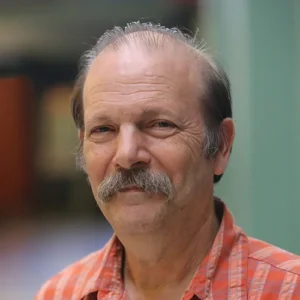
Prof. Moshe Vardi
Rice University

Prof. Moshe Vardi
Rice University
Homo ratiocinator (Reckoning Human)
Homo sapiens, “wise human” in Latin, is the taxonomic species name for modern humans. But observing the current state of the world and its trajectory, it is hard to accept the description “wise”. The speaker is not the first to object to the “sapiens” descriptor. The French philosopher Henri-Louis Bergson argued in 1911 that a better term would be Homo Faber, referring to human tool-making ability. I’d like to offer an alternative: Homo rationcinator, or reckoning human – where reckoning refers to both reasoning and computing. I will conclude by discussing implications of this analysis to the current relentless drive for Artificial General Intelligence.
Prof. Moshe Ya’akov Vardi is an theoretical computer scientist. He is the Karen Ostrum George Distinguished Service Professor in Computational Engineering at Rice University, United States. and a faculty advisor for the Ken Kennedy Institute. His interests focus on applications of logic to computer science, including database theory, finite model theory, knowledge of multi-agent systems, computer-aided verification and reasoning, and teaching logic across the curriculum. He is an expert in model checking, constraint satisfaction and database theory, common knowledge (logic), and theoretical computer science.
Vardi has authored or co-authored over 700 technical papers as well as editing several collections. He has authored the books Reasoning About Knowledge with Ronald Fagin, Joseph Halpern, and Yoram Moses, and Finite Model Theory and Its Applications with Erich Grädel, Phokion G. Kolaitis, Leonid Libkin, Maarten Marx, Joel Spencer, Yde Venema, and Scott Weinstein. He is senior editor of Communications of the ACM, after serving as its editor-in-chief for a decade
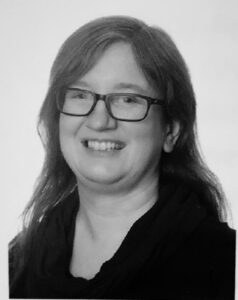
Sally Chambers
British Library/DARIAH
Enabling reproducible research workflows using Open Science methods: Critical Infrastructures at the intersection of Arts, Humanities and Cultural Heritage
Cross-domain collaboration between Research Infrastructures is becoming increasingly important. Initiatives such as OSCARS (Open Science Cluster’s Action for Research and Society) are helping to foster the uptake of Open Science in Europe, through Science Cluster-based collaboration. Within DARIAH, the Digital Research Infrastructure for the Arts and Humanities, as well as continuing to work closely with our sister infrastructures in the Social Sciences and Humanities, we now collaborate with colleagues from Astronomy and Particle Physics, Environmental Sciences, Life Sciences, Photon and Neutron Sciences to explore how together we can address common challenges in facilitating data-driven research using Open Science methods.
It is no longer enough to engage with a sole research infrastructure alone. Researchers working at the intersection of Arts, Humanities and Cultural Heritage, not only need to collaborate with research infrastructures such as DARIAH and CLARIN, but also with related initiatives such as the Common European Data Space for Cultural Heritage and the Cultural Heritage Cloud. Furthermore, thanks to initiatives such as the European Open Science Cloud, access to virtual machines, computational power and interactive notebooks is becoming more pervasive. It is therefore essential to support our research communities in navigating the increasingly complex research infrastructure landscape.
However, with complexity comes additional functionality. As digitised and born-digital cultural heritage collections are being increasingly transformed into ‘Collections as data’, they can be interconnected with tools and services, such as those made discoverable through the Social Sciences and Humanities (SSH) Open Marketplace. The potential for enabling the creation of reproducible research workflows using Open Science methods, starts to become a reality. In this paper, we will explore how the datasets, tools and workflows, as essential ingredients in the digital research ecosystem, are increasingly being transformed into critical infrastructures for excellent, data-centred research at the intersection of the Arts, Humanities and Cultural Heritage within the broader Open Science ecosystem, exemplified by the European Open Science Cloud (EOSC).
Sally Chambers is Head of Research Infrastructures Services at The British Library. She combines this role with her work as member of the DARIAH, the Digital Research Infrastructure for the Arts and Humanities Board of Directors, where she focuses on the development of sustainable services and FAIR dataset portfolios in the context of the European Open Science Cloud (EOSC), the common European Data Space for Cultural Heritage and the Cultural Heritage Cloud. Her previous roles include: Digital Humanities Research Coordinator at the Ghent Centre for Digital Humanities, Ghent University in Belgium; DATA-KBR-BE project coordinator at KBR, Royal Library of Belgium which facilitates data-level access to KBR’s digitised and born-digital collections for digital humanities research and Secretary-General of DARIAH-EU, based in the Göttingen Centre for Digital Humanities, Germany. She has been an active participant in the international Galleries, Libraries, Archives and Museums (GLAM) Labs community, and a co-author of Open a GLAM Lab.
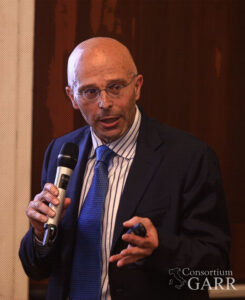
Prof. Massimo Bernaschi
GARR/ IAC-CNR
High-Performance Computing and Communication in Social Sciences and Humanities
Nobody would deny the steadily increasing importance of High-Performance Computing techniques in Social Sciences and Humanities.
However, the complexity and challenges that modern Computing and Communication platforms pose are also growing.
Hence, it is necessary to invest not just in hardware, but also in creating and maintaining specific skills beyond the standard toolbox of people working in Social Sciences and Humanities.
We present examples of such challenges and provide hints for addressing them through a collaborative approach.
Massimo Bernaschi graduated in Physics in 1987 with Giorgio Parisi working on the development of the APE computer at INFN. Massimo Bernaschi – Vice President of the GARR ConsortiumHe worked for 10 years at the European Center for Scientific and Engineering Computing at IBM. He received two Outstanding Technical Achievement Awards from IBM. Since 1998 he has been a Director of Technology at the Institute for Applications of Computing at C.N.R. He is Professor of Blockchain and Cryptocurrencies at the University “LUISS” of Rome. He is a government delegate at the European Defense Agency for CapTech “Communication, Information System and Networks”. He has developed open source software packages such as REMUS, OpenCapwap, SockMi, BitCracker. In recent years he has been very active in programming Graphics Processing Units (GPU). In 2012 he received, for the results obtained in this field, the title of CUDA Fellow from Nvidia. He was part of the task force of the Ministry of Innovation for data management during the COVID-19 emergency.

Prof. Ernesto Damiani
Khalifa University / Univ. of Milan
Cyber-Humanities: how I learned to stop worrying and love LLMs
Many concerns have been raised on the role of Large Language Models (LLMs) in humanities research, based on the perceived danger that the inference methods of generative AI could reduce the variety and originality of the contributions. This talk will present use cases that rely on human-in-the-loop to alleviate this threat, fostering high quality machine-assisted research in various humanities disciplines.
Prof. Ernesto Damiani is Full Professor at Università degli Studi di Milano, Director of Center for Cyber Physical Systems (C2PS) within the Khalifa University, leader of the Big Data area at Etisalat British Telecom Innovation Center, and President of the Consortium of Italian Computer Science Universities (CINI). He is also part of the ENISA Ad-Hoc Working Group on Artificial Intelligence Cybersecurity, where he serves as Rapporteur.
According to DBLP (January 2021), Ernesto Damiani has authored 137 journal papers, 336 refereed articles in proceedings of international conferences, and published 57 books and chapters as an author or editor. According to Google Scholar, Ernesto’s work has been cited more than 18,200 times and his h-index is 57; 291 of his papers have at least 10 citations. On Scopus he has 616 documents and more than 7,100 total citations by more than 5,600 documents. His Scopus h-index is 36. With 542 publications listed on DBLP, he is considered among the most prolific European computer scientists.
His areas of interest include cyber-physical systems, Big Data Analytics, Edge/Cloud security and performance, Artificial Intelligence, and Machine Learning. Ernesto Damiani has pioneered model-driven data analytics. Ernesto has been a recipient of the Stephen Yau Award from the Service Society, of the Outstanding contributions Award from IFIP TC2, of the Chester-Sall Award from IEEE IES, and of a doctorate honoris causa from INSA – Lyon (France) for his contribution to Big Data teaching and research.

Prof. Dr. Ines Vodopivec
AI4LAM
Reliable and Trustworthy Use of AI in Cyber Humanities
The AI for Libraries, Archives, and Museums (AI4LAM) community is a global, cross-sectoral, and participatory network dedicated to advancing the use of artificial intelligence within the cultural heritage sector. The community leads the way in developing and maintaining cutting-edge AI tools and services specifically designed for heritage institutions, which serve as the custodians of the data typically utilized in (cyber) humanities.
AI-driven tools and solutions have the potential to revolutionize data management, improve access to digital collections, and streamline administrative processes. The AI4LAM mission is to create a framework for organizing, sharing, and advancing knowledge about AI, while also advocating for reliable and trustworthy AI tools and services.
By exchanging experiences and insights, we can collectively shape the future of the cultural heritage sector while fostering collaboration among GLAM institutions, research and educational stakeholders to address the diverse needs of the coming decade in cyber humanities. Furthermore, AI4LAM’s commitment to openly share and provide access to knowledge aligns with Open Science principles to make scientific research more transparent, accessible, and collaborative. The integration of AI tools into LAM digital infrastructures provides researchers with powerful tools to analyse and interpret vast datasets. But additionally, we must confront a thought-provoking question: Do we still need metadata in an AI-supported environment, or we must rethink such a foundational concept?
Associate Professor Dr. Ines Vodopivec is deeply committed to advancing digitization theory and practice within heritage institutions on an international scale. Her notable roles include serving as Deputy Director of the National and University Library of Slovenia, and Vice Dean at Nova University in Ljubljana, being a dedicated member of the UNESCO Memory of the World National Committee, and participating as a member of the IFLA Digital Humanities – Digital Scholarship Committee.
More recently, she assumed the role of Secretary General of AI4LAM, working with the National Library of Norway and Stanford University Library, USA, further solidifying her leadership and influence in the fields of digital heritage and innovative methodologies. She is also a Management Board Member of the Europeana Network Association.
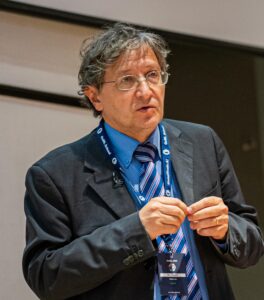
Prof. Pietro Liò
Cambridge University
AI à la carte
The talk will focus on Mechanicistic interpretability for graph- and transformer-based architectures such LLMs and Foundation models. I will act both as a grumpy scientist and as a tourist doing excursions. I will consider possible AI divide while touching topics in medicine, natural and social sciences.
Pietro Liò is a Professor at the Department of Computer Science and Technology of the University of Cambridge(UK). He is a faculty member of Cambridge Centre for AI in Medicine, a fellow of of Ellis, the European Lab for Learning & Intelligent Systems and a member of the Academia Europaea. His research interests focus on developing Artificial Intelligence and Computational Biology methods and models to analyse multi scale and multidimensional data, to understand diseases complexity and address personalised and precision medicine.